
INTRODUCTION TO DATABASE
- Oct 20, 2015
- 1 min read
INFORMATION APPLICATION SYSTEMS
-Hardware
-People
-Software
-Data
DATA
-Data is distinct pieces of information, usually formatted in a special way. All software is divided into two general categories:data and programs. Programs are collections of instructions for manipulating data.
-e.g. personal data, course data
Activies that involve data
-purchase using credit card
-booking flight ticket
-shopping online
FILE BASED APPROACH
-collecton of applications programs that perfrom services for the end users (e.g reports)
Limitations of File Based Approach
-separation and isolation of data
-duplication of data
-data dependence
DATABASE MANAGEMENT SYSTEM
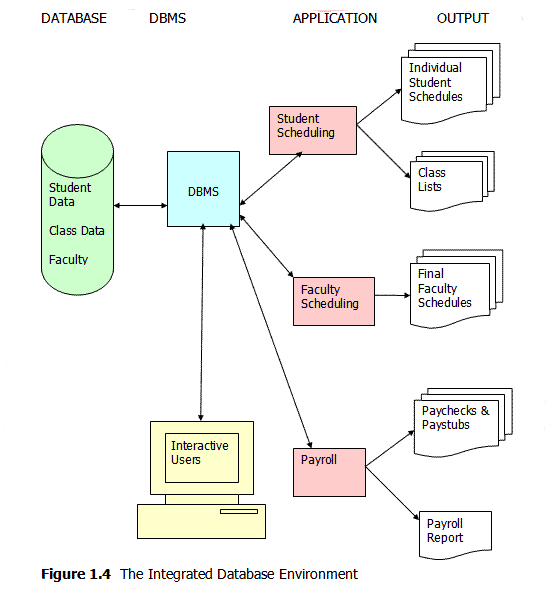
-Shared collection of logically related data (and a description of this data), designed to meet the information needs of an organization.
-software that handles the storage, retrieval, and updating of data in a computer system.
-A database management system (DBMS) is a collection of programs that enables you to store, modify, and extract information from a database. There are many different types of database management systems, ranging from small systems that run onpersonal computers to huge systems that run on mainframes.
The following are examples of database applications
computerized library systems
automated teller machines
flight reservation systems
computerized parts inventory systems
Components of DBMS Environment
-Hardware
-Software
-Data
-People
-Procedures
ADVANTAGES OF DBMS
•Control of data redundancy
•Data consistency
•More information from the same amount of data
•Sharing of data
•Improved data integrity
•Improved security
•Enforcement of standards
•Economy of scale
DISADVANTAGES OF DBMS
•Complexity
•Size
•Cost of DBMS
•Additional hardware costs
•Cost of conversion
•Performance
•Higher impact of a failure
Comments